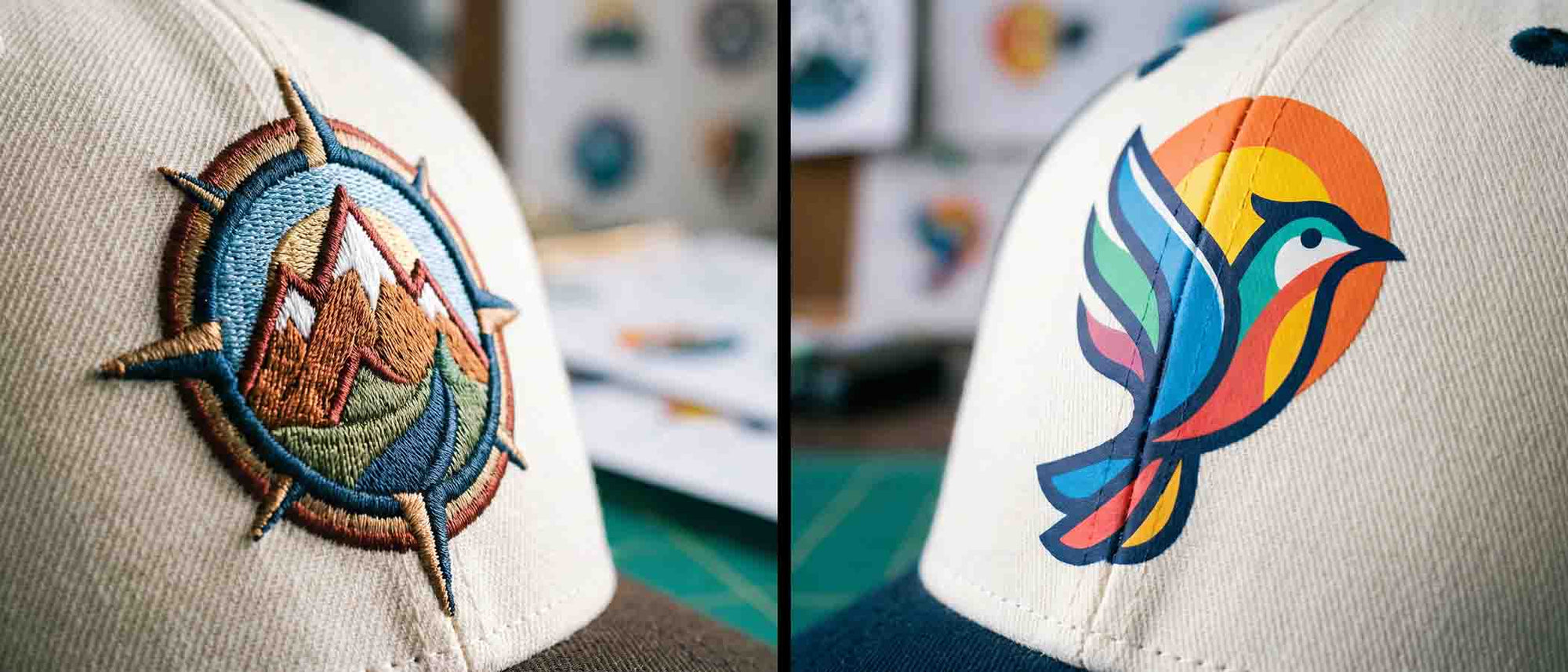






If you've ever seen a hat logo that literally rises off the surface of the cap, that's 3D puff embroidery. It's a stitching technique that adds foam underneath the embroidery thread to create a raised, dimensional effect. Compared to standard embroidery, it feels bolder, more premium, and instantly more noticeable — which is exactly why so many brands use it on custom hats.
At Foremost Hat, 3D puff embroidery is one of the most requested customization options for snapbacks, trucker hats, and structured caps — especially for streetwear brands, golf brands, and outdoor companies that want their logos to stand out.
🔽 Quick Navigation
- 📌 3D Puff Embroidery vs Flat Embroidery: What's the Difference?
- 📌 How Is 3D Puff Embroidery Made? A Look at the Process
- 📌 What Logos and Designs Work Best with 3D Puff Embroidery?
- 📌 Best Hat Styles for 3D Puff Embroidery
- 📌 Which Brands and Industries Use 3D Puff Embroidery — and Why It Works
- 📌 So, Is 3D Puff the Right Choice for Your Hat?
- ❓FAQ
3D Puff Embroidery vs Flat Embroidery: What's the Difference?

Both are embroidery — but the visual effect couldn't be more different.
- Flat embroidery stitches your design directly onto the fabric. The result is clean, smooth, and sits flush with the hat surface. It handles fine details well — thin lines, small text, intricate shapes — and works across virtually every hat type. If your logo has lots of detail or delicate elements, flat embroidery is usually the safer choice.
- 3D puff embroidery works differently. A layer of foam is placed underneath the stitching, lifting the design up off the surface and giving it that raised, three-dimensional look. The effect is bold and tactile — it catches the light, creates depth, and gives a hat an unmistakably premium feel.
The trade-off? 3D puff has real design limitations. It requires bolder shapes and thicker lines — at Foremost Hat, the minimum line thickness for 3D puff is 7–10mm (compared to 4–5mm for flat). It also supports fewer thread colours — up to 3 for 3D puff, versus up to 8 for flat embroidery. Gradients and fine calligraphy fonts simply won't work. But for the right design, the impact is unmatched.
How Is 3D Puff Embroidery Made? A Look at the Process

The process starts before a single stitch is placed. Your artwork needs to go through embroidery digitising — a step where a skilled digitiser converts your graphic into a machine-readable stitch file. This determines everything: stitch paths, densities, thread colours, fills, and outlines. For 3D puff specifically, the digitising has to account for the foam layer, adjusting how the stitches lock down around the edges to keep the foam neatly contained.
At Foremost Hat, free digitisation is included with all embroidery orders, and every new design gets an artwork proof before production begins. This means you can check the placement, colours, and stitch approach before anything is committed to fabric.
What Logos and Designs Work Best with 3D Puff Embroidery?

Not every design is a good candidate for 3D puff, and getting this right makes all the difference.
What works well:
Bold, block letters are ideal. Simple geometric shapes — circles, shields, diamonds — translate beautifully into 3D puff. Single-element wordmarks or initials are particularly effective. The key is keeping lines thick and shapes solid. At Foremost Hat, all lines in a 3D puff design should be between 0.2" and 0.5" to ensure a quality result.
What doesn't work:
Calligraphy-style fonts, very thin lines, gradients, photographic images, and designs with large amounts of negative space are all problematic for 3D puff. These elements either won't hold the foam properly or will lose definition in the finished product. For designs like these, flat embroidery is a better fit.
Best Hat Styles for 3D Puff Embroidery

The structure of the hat matters a lot here. 3D puff works best on hats with a firm, stable front panel — that rigidity is what allows the raised embroidery to sit cleanly without puckering or distortion.
Snapback Caps
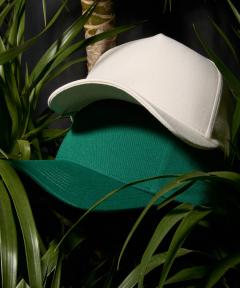
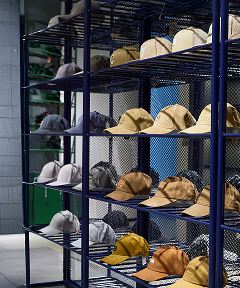
Snapback caps are a natural choice. Their structured crowns and flat bills give the front panel the stability 3D puff needs. Browse Foremost Hat's wholesale snapback range to see the styles available.
Trucker Hats
Trucker hats also work well. The structured foam front panel is particularly receptive to bold embroidery, and the contrast between the solid front and mesh back gives the hat a strong visual identity. Check out the trucker hat collection.
Dad Hats
Dad hats can work, but with a caveat. Their softer, unstructured construction means the front panel has slight curvature — long horizontal text can distort slightly. For a simple logo or short wordmark in the centre, it's usually fine. See the dad hat collection.
Beanies
Beanies are generally not recommended for 3D puff. The stretchy knit fabric doesn't provide the stability needed, and the finished embroidery is likely to distort.
Which Brands and Industries Use 3D Puff Embroidery — and Why It Works

Streetwear & Lifestyle Brands — Standing Out Is the Whole Point
Streetwear and lifestyle brands use 3D puff to create limited-edition capsule pieces where the hat is meant to be noticed. The tactile, three-dimensional logo adds a premium feel that justifies a higher retail price.
Sports Teams & Athletic Brands — Built to Be Seen from the Stands
Sports teams and athletic brands have relied on 3D puff for decades. Bold team initials or mascot emblems in raised embroidery photograph well, hold up through repeated wear, and read clearly from a distance.
Corporate & Promotional Merchandise — When a Cap Needs to Feel Like a Gift
Corporate and promotional merchandise increasingly uses 3D puff because it signals quality. A raised logo on a branded cap communicates that the item was made with care — which matters when the cap is a gift, a staff uniform piece, or a client giveaway.
Outdoor & Workwear Brands — Logos That Last as Long as the Hat
Outdoor and workwear brands value 3D puff for its durability. Embroidery outlasts screen printing across wash cycles, and the raised foam backing adds an extra layer of robustness to the logo area.
So, Is 3D Puff the Right Choice for Your Hat?
The honest answer is: it depends on your design. If your logo is bold, clean, and built around thick shapes or block letters, 3D puff will make it look better than almost any other technique. If it's detailed, delicate, or relies on thin lines, flat embroidery will serve you better — and there's no shame in that.
When in doubt, the simplest move is to send us your artwork before you commit to anything. We'll tell you honestly which technique suits it, and if any adjustments would help. No minimum order means there's no pressure — you can start small, see how it looks, and scale from there.
❓FAQ: The 3D Puff Embroidery Questions We Get Asked Most
Q1: Is 3D puff embroidery more expensive than flat embroidery?
D puff requires additional materials (the foam layer) and more precise digitising, so there can be a modest cost difference. For accurate pricing based on your design and quantity, contact the Foremost Hat team for a quote within 24 hours.
Q2: How many colours can I use in a 3D puff design?
At Foremost Hat, 3D puff embroidery supports up to 3 thread colours. If your logo requires more colours, flat embroidery (up to 8 colours) or an alternative technique like DTF printing might be a better fit.
Q3: My logo has thin lines — can I still use 3D puff?
If lines in your design are thinner than 0.2", they won't work in 3D puff. In those cases, the Foremost Hat team will let you know and suggest either adapting the design (making elements bolder) or switching to flat embroidery. Free digitising is included, and the team will review your artwork before production.
Q4: Can I combine 3D puff and flat embroidery in the same design?
Yes, this is actually a popular approach. A common technique is to use 3D puff for the main shape or lettering — the part you want to stand out — and flat embroidery for finer details or thinner elements around it. If you're unsure how to split your design, share your artwork with us and we'll advise on what works best for each element.