

Embroidery wins on durability, printing wins on detail. But honestly, that's just the starting point — the real decision is a lot more nuanced than that.
Pick the wrong technique for your logo and you'll end up with stitching that distorts a fine gradient, or a printed transfer that starts peeling after a season. Pick the right one, and your brand looks sharp on day one and still looks great a year later.
🔽 Quick Navigation
- 📌 Why Your Logo Technique Matters More Than You Think
- 📌 What Is Hat Embroidery? How It Works and Why Brands Love It
- 📌 Hat Printing Explained: DTF Heat Transfer, Silicone Print & Reflective Transfer
- 📌 Durability, Cost & Brand Fit: Embroidery vs Printing Head to Head
- 📌 Which Hat Styles Work Best with Embroidery?
- 📌 When Printing Is the Smarter Choice for Your Brand
- 📌 Still on the Fence? Here's the Honest Next Step
- ❓FAQ
Why Your Logo Technique Matters More Than You Think

A hat can be beautifully made, but if the logo starts peeling after a few washes, that's the impression your brand leaves behind. The decoration method you choose affects not just how your logo looks on day one, but how it holds up over time — and how it fits your hat style, artwork, and budget.
Whether you're building a brand, outfitting a team, or launching a merch line, getting this decision right from the start saves a lot of headaches later.
What Is Hat Embroidery? How It Works and Why Brands Love It

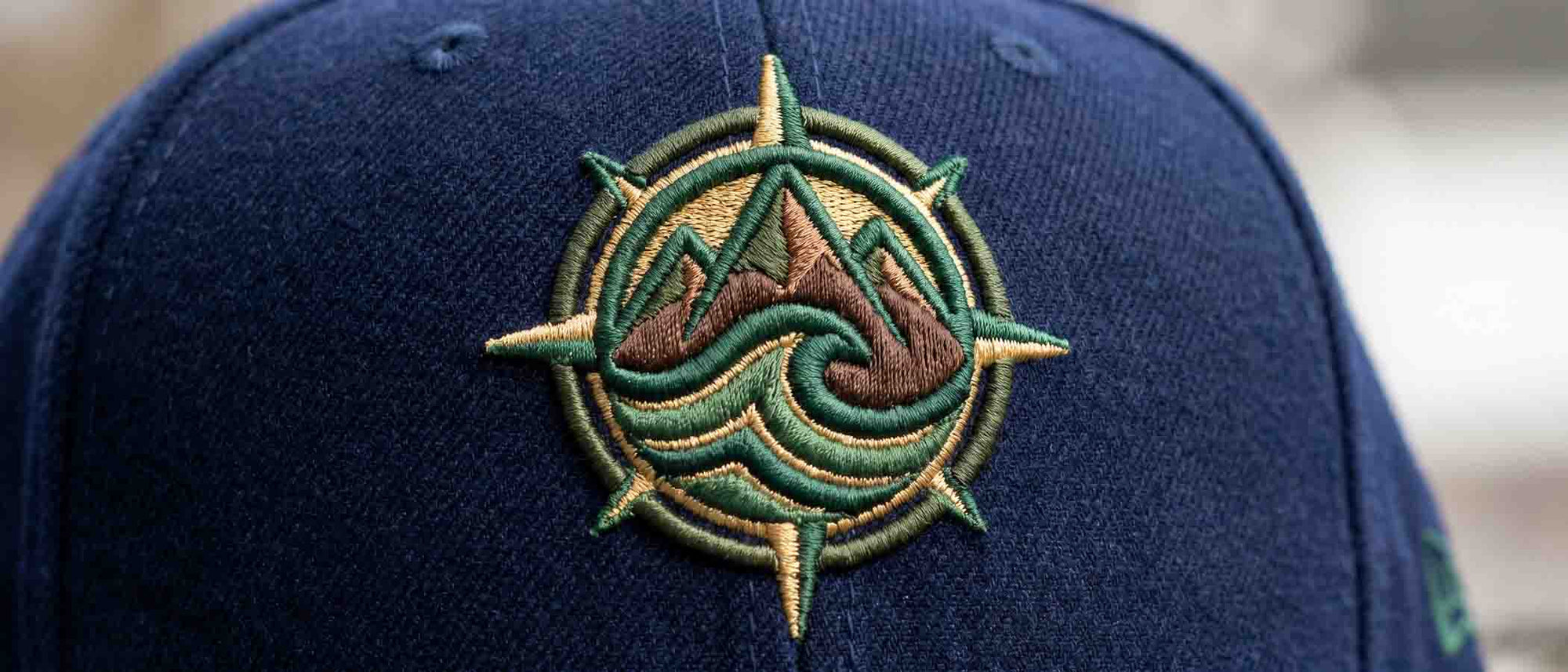
Embroidery is the process of stitching your logo directly into the fabric of the hat using thread. At Foremost Hat, we've been doing this since 1996, and it remains one of the most popular ways to brand a hat — for good reason.
We offer two main types: flat embroidery and 3D puff embroidery. Flat embroidery stitches the design smoothly onto the surface — ideal for fine details and most hat types. 3D puff uses foam underneath to raise the design, giving it a bold, elevated look that really pops on structured caps.
For thread, we have three options: 120D Matt Thread (900+ colours, matte finish), Metallic Thread (gold, silver, copper for a high-shine effect), and Bright Polyester Thread (bold colour with crisp finish). Every colour can be matched to your brand's visual identity using our RGB-matched digital charts.
One thing worth knowing: embroidery works best with clean, solid shapes and bold text. Very thin lines, tiny fonts, gradients, and photographic images don't translate well into stitches — these are better handled by printing.
Hat Printing Explained: DTF Heat Transfer, Silicone Print & Reflective Transfer

Printing opens up a whole different set of possibilities, especially when your design has a lot going on — gradients, photo-style artwork, multiple colours, or very fine details.
At Foremost Hat, we currently offer three key printing methods:
DTF Heat Transfer
Prints the design onto a special film and transfers it to the cap with heat and pressure. It supports unlimited colours, complex graphics, and gradient artwork. Minimum text height is just 1mm, and minimum line thickness 1mm. This is the most versatile print option we offer.
Silicone Print
Applies a flexible silicone layer to the surface, giving a slightly raised, tactile finish with strong weather resistance. Great for sports and outdoor brands. Supports up to 5 colours.
Reflective Heat Transfer
Uses reflective film applied with heat. The design reflects light in low-visibility conditions, making it a smart choice for running caps, cycling caps, and safety-related apparel.
Durability, Cost & Brand Fit: Embroidery vs Printing Head to Head

Here's a straightforward breakdown to help you compare:
Durability
Embroidery is stitched into the fabric — it doesn't peel, crack, or fade easily, even after heavy use and repeated washing. Printed logos, particularly heat transfers, can degrade over time if not cared for properly, though silicone print offers better durability among print options.
Colour Complexity
Flat embroidery supports up to 8 thread colours, and neither embroidery type can reproduce gradients. Printing — especially DTF — handles unlimited colours and gradients with no problem.
Design Detail
Embroidery has minimum line and text size requirements (flat: 4–5mm line thickness; 3D puff: 7–10mm). Printing, especially DTF, handles finer detail — down to 1mm line thickness.
Perceived Quality
Embroidery tends to feel more premium and substantial on the hat — which is why it's the go-to choice for most branded blank dad hats, polo brands, and corporate uniforms. Printing can look striking on the right design, but some methods feel less premium to the touch.
MOQ & Cost
Both methods at Foremost Hat come with no minimum order quantity, which is ideal for brands starting small or testing designs. Pricing scales favourably with volume for both.
Which Hat Styles Work Best with Embroidery?

Not all hats are equally suited to embroidery — and knowing this upfront saves you from disappointment.
Structured Caps
Structured caps are the most stable base for embroidery. The firm front panel holds its shape, making it easier to achieve clean, detailed stitching — great for corporate logos and intricate designs.
Blank Dad Hats
Blank Dad Hats are one of the most popular choices for branded embroidery. The soft, unstructured front panel has a slight curve, so it's best suited to medium-width logos rather than very long horizontal text. Keep your design clean and reasonably sized, and a dad hat with embroidery looks effortlessly stylish.
Trucker Hats
Trucker hats work well for front-panel embroidery. The mesh side and back panels aren't suitable for stitching, so keep your main design on the solid front.
Beanies
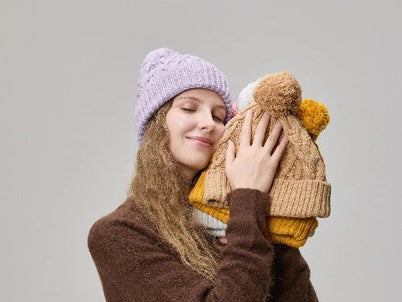
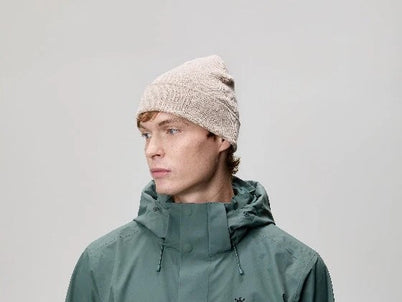
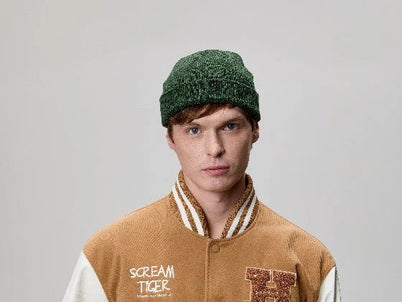
Beanies support embroidery on the cuff area, with a max area of around 12cm × 4cm. Because the fabric is stretchable, bold shapes and thicker lines work better than fine details.
Bucket Hats
Bucket hats can take front embroidery, but the curved crown can distort tall or complex designs — small to medium flat logos work best.
When Printing Is the Smarter Choice for Your Brand

Printing isn't a compromise — in the right situation, it's actually the better tool for the job.
If your logo involves gradients, photographic elements, or more than 8 colours, printing is the way to go. Embroidery simply can't replicate these effects. DTF heat transfer in particular handles complex, full-colour artwork cleanly and accurately.
If you're working with performance or running caps made from lightweight, technical fabrics, printing often works better. Embroidery adds weight and can affect the breathability of performance headwear. Silicone print or DTF transfer keeps the hat lightweight while still looking sharp.
If you need reflective elements for visibility — say, for a cycling or outdoor brand — reflective heat transfer is the only decoration method that delivers that functional, safety-focused finish.
If you're producing a short run of event merchandise or promotional caps with colourful, detailed artwork, printing — especially DTF — gives you the flexibility and colour richness that embroidery can't match.
Still on the Fence? Here's the Honest Next Step
By now you should have a pretty clear sense of which direction suits your brand. If your logo is clean, bold, and built to last — embroidery is almost always the right call. If your artwork is detailed, colourful, or needs that extra visual punch — printing gives you the freedom to make it work.
Either way, you don't need to commit to a large order to get started. With no minimum order quantity and a sample approval step built into every job, you can test, refine, and scale at your own pace.
❓FAQ: The Logo Questions We Get Asked Most
Can I order just one hat with embroidery or print?
Yes. Foremost Hat has no minimum order quantity for both embroidery and printing. You can order a single hat or 10,000 — pricing scales with volume.
What file format should I send for my logo?
For embroidery, we recommend AI, EPS, or PDF vector files, or a high-resolution PNG at 300 DPI or higher. For printing, the same vector formats are preferred, and we also accept PSD, SVG, and TIFF.
My logo has a gradient — can it be embroidered?
Standard embroidery cannot reproduce gradients because it works only with solid thread colours. If your design has gradient elements, printing (especially DTF) is the right choice.
What happens if there's a problem with my order?
If there's any manufacturing issue on our end, we offer rework or replacement. Custom orders cannot be refunded once production begins, which is why we have a thorough sample approval step in place.