



Same hat, wildly different prices. Here's exactly why — and how to negotiate with confidence.
You send the same brief to three suppliers and get back three quotes that look nothing alike. £3.50 per hat. £7.20 per hat. £11.80 per hat. None of them explain why. This guide breaks down the five factors that actually drive custom hat pricing — so you can compare quotes properly, avoid hidden costs, and commission with confidence.
🔽 Quick Navigation
- 📌 Same Hat, Different Price: Why Quotes Vary Between Suppliers
- 📌 Hat Style and Fabric Grade
- 📌 Logo Technique and Customisation Complexity
- 📌 Minimum Order Quantity and Delivery Lead Time
- 📌 Supplier Type and Service Capability
- 📌 Private Labelling and Custom Packaging
- 📌 Getting the Quote Right: What to Prepare
- ❓FAQ
Same Hat, Different Price: Why Quotes Vary Between Suppliers
Custom hat pricing isn't arbitrary — but it's also rarely transparent. Suppliers combine margin assumptions, tooling fees, raw material grades, and service overhead in ways that make apples-to-apples comparison nearly impossible without a framework. The five factors below are what experienced buyers actually use to decode a quote.
Hat Style and Fabric Grade
The structure and material of the hat itself form the baseline cost before any customisation begins. A 5-panel unstructured cap in mid-weight cotton twill is priced very differently from a 6-panel structured snapback in recycled polyester or a heritage wool flat cap.
|
Style |
Common Fabric |
Typical Unit Cost Range |
|
5-panel camp cap |
Cotton canvas / twill |
£2.80 – £5.50 |
|
6-panel structured snapback |
Polyester / cotton blend |
£3.20 – £6.00 |
|
Trucker cap |
Foam front + mesh back |
£2.50 – £4.80 |
|
Flat cap / baker boy |
Wool / tweed |
£3.00 – £14.00 |
|
Beanie |
Acrylic / merino |
£3.00 – £9.00 |
The UK Sustainability Premium
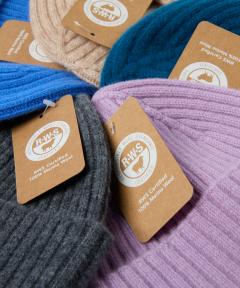
UK buyers are increasingly specifying GOTS-certified organic cotton, GRS recycled materials, or Oeko-Tex 100 compliance. Expect a 15–35% premium on base fabric cost for certified sustainable materials — and always ask for documentation, not just claims.

Logo Technique and Customisation Complexity
This is the single biggest source of price variation that buyers underestimate. The decoration method determines not just per-unit cost, but tooling fees, colour limitations, and minimum order implications.
|
Technique |
Best For |
Per-unit Add |
|
Flat embroidery |
Clean wordmarks, simple icons |
£0.80–£2.50 |
|
3D puff embroidery |
Bold, raised logos |
£1.50–£3.50 |
|
Woven patch |
Detailed multi-colour artwork |
£1.20–£3.00 |
|
Rubber/PVC patch |
Outdoor & workwear brands |
£1.80–£4.00 |
|
Screen print |
Flat graphic, high-run |
£0.50–£1.50 |
|
Laser etching |
Suede, leather, structured caps |
£0.80–£2.00 |
Complexity factors that inflate cost: number of thread colours, placement on curved panels, underlay specifications, and whether you need both front and back decoration.
Minimum Order Quantity and Delivery Lead Time
MOQ and timeline are co-dependent — and both directly affect unit cost. Buying 50 hats in 2 weeks costs disproportionately more than 300 hats in 8 weeks. Here's how to read this tradeoff.
|
Order Qty |
Typical Lead Time |
Unit Price Impact |
|
25–50 units |
2–4 weeks (local) |
+40–80% vs. 300+ run |
|
100–200 units |
3–5 weeks |
+15–30% |
|
300–500 units |
6–10 weeks (offshore) |
Baseline price |
|
500+ units |
8–14 weeks |
-10–25% volume discount |
UK-based suppliers (or those with UK warehouse stock) typically charge a premium but offer faster fulfilment — relevant if you're shipping to UK retail partners or running a campaign with a firm deadline.
Supplier Type and Service Capability
The type of supplier you're working with fundamentally changes what you're actually paying for — not just the hat. Choosing the wrong tier for your needs is one of the most common sourcing mistakes.
|
Supplier Type |
Price Level |
Best For |
Watch Out For |
|
Trading company (middleman) |
Mid-high |
Low risk, easy comms |
Limited factory visibility |
|
Direct factory (overseas) |
Low |
Volume orders, cost control |
Communication, QC, IP risk |
|
UK local decorator |
High |
Small runs, fast turnaround |
Limited blank selection |
|
UK-based importer/brand mgr |
Mid |
Full-service, brand-ready |
MOQ requirements |
UK brands sourcing at scale often work with a UK-based account manager who owns production relationships overseas — this adds a margin layer but significantly reduces project management burden and compliance risk.
Private Labelling and Custom Packaging
This is the invisible line item that catches brands off guard. Moving from a generic hat with your logo to a fully branded product — your own woven label, hang tag, and box — can add £1.50–£4.00 per unit depending on components.

Typical Private Label Components
- Woven size label (replace manufacturer label): £0.15–£0.40 per unit
- Custom sweatband with brand name: £0.30–£0.80 per unit
- Custom hang tag (printed both sides): £0.20–£0.60 per unit
- Branded polybag or tissue wrap: £0.10–£0.30 per unit
- Custom gift box or rigid lid box: £0.80–£2.50 per unit
- Label setup/tooling (one-time): £50–£200 per component
Getting the Quote Right: What to Prepare
Before you approach any supplier, having the following information ready will result in faster, more accurate quotes — and signals to the supplier that you're a serious buyer.
| HAT SPEC | Style, colour, closure type, fabric preference |
| LOGO FILE | Vector (.ai or .eps), plus your preferred technique |
| QUANTITY | Total units + size/colour breakdown if mixed |
| TIMELINE | Firm in-hand date, not just "as soon as possible” |
| PRIVATE LABEL? | Specify label, hang tag, packaging requirements |
| COMPLIANCE | Any sustainability certs, UKCA, or retail requirements |
❓FAQ Custom Hats UK Pricing — The Questions Buyers Actually Ask
Why is the sample so expensive but the bulk order cheap?
Samples require setup, digitisation, and hand-production with no economies of scale. A single sample hat might cost £25–£60 even if the bulk unit price is £4.00. This is normal and expected — what you're paying for is supplier time and tooling validation, not the hat itself. Some suppliers credit the sample cost against your bulk order.
Is there a minimum order I should hit before going overseas vs. UK?
The break-even point is typically around 150–200 units. Below that, the savings from overseas sourcing are often absorbed by freight, customs duties (post-Brexit), and the cost of your time managing a cross-border supplier. For under 100 units, UK decorators frequently offer better total value once you factor in logistics and lead time risk.
Do I pay import duties on hats made overseas?
Yes — post-Brexit, hats imported from outside the UK (including EU countries) may be subject to UK customs duty. For most headwear (HS code 6505), the standard UK duty rate is around 12%. Your supplier should provide a commercial invoice with the correct HS code. If they can't, that's a red flag. Always factor import duty + VAT into your landed cost calculation before comparing quotes.
The quote looks great but there's a "tooling fee" I didn't expect. Is that normal?
Yes — tooling fees cover the creation of embroidery digitisation, woven patch moulds, or rubber patch dies. These are one-time costs (£30–£200 depending on technique) that you don't pay again on repeat orders with the same supplier. A legitimate supplier will itemise this separately. Watch out if the tooling fee appears on every reorder — that's unusual and worth questioning.
How do I know if a supplier's "sustainable" hat is actually sustainable?
Ask for the certificate number, not just a claim. GOTS, GRS, and Oeko-Tex certificates are publicly verifiable databases — you can search the certificate number yourself. If a supplier says "eco-friendly cotton" without a certification number, assume it's unverified marketing language. UK retailers increasingly require documentation for sustainability claims under the Green Claims Code, so this matters beyond ethics alone.
Can I get hats delivered to a UK fulfilment centre directly from overseas?
Yes, but the logistics need careful planning. You'll need to handle customs clearance (either via a freight forwarder or DDP — Delivered Duty Paid terms from the supplier), ensure the carton marks meet your 3PL's requirements, and factor in lead time buffers for customs holds. Some overseas suppliers offer DDP shipping to UK addresses, which simplifies things significantly — ask if this is available and compare the total landed cost.
The supplier wants 50% upfront. Should I be concerned?
50% deposit, 50% before shipping is standard for overseas production orders — it's not a red flag on its own. What matters is whether you have a signed purchase order, clear spec sheet, and agreed quality inspection terms before you wire money. For new suppliers, request a pre-shipment inspection (PSI) by a third-party QC firm (SGS, Bureau Veritas, etc.) — this typically costs £200–£400 and is the single best protection against receiving wrong or substandard goods.
Why does adding one more colour to my logo double the price?
For embroidery, additional thread colours don't typically increase price significantly — embroidery is priced by stitch count, not colour count. However, for screen printing, woven patches, or PVC patches, each colour adds a layer of production complexity, a separate screen or mould element, and more QC touchpoints. If your technique is embroidery and a supplier is charging per colour, clarify whether they're confusing it with a different technique or adding unjustified complexity charges.